
Last updated: August 2026
Planning a trip to Northeast India from other states of India, Europe, North America, Australia, Southeast Asia or elsewhere? International travellers often have different questions about Indian visas, regional permits, road travel, accommodation, connectivity, money, safety and cultural etiquette. We have answered the questions our guests most frequently ask before travelling to Assam, Meghalaya, Arunachal Pradesh, Nagaland and Sikkim.
Northeast India Travel at a Glance
| Question | Quick Answer |
|---|---|
| Best gateway | Guwahati |
| Best general season | October–April |
| International visa | An Indian visa is required. |
| Arunachal, Nagaland, Manipur, Mizoram | PAP is required for foreign nationals (since March 2025); ILP for Indian nationals. |
| Sikkim | PAP required for foreign nationals; special permit for Indian nationals to visit North Sikkim, Nathula Pass and Changu Lake |
| Road travel | Often long and winding |
| Internet | Good in towns, limited in remote areas |
| Currency | Indian Rupee |
| Private tours | Available |
| English | Widely understood in tourist areas |
Frequently Asked Questions (FAQs) about Northeast India
Yes. Despite outdated media perceptions, Northeast India is one of the safer and more welcoming regions in the country for travellers, including solo and women travellers. The main practical risks are road conditions (landslides, bad roads in the hills) and occasional local strikes (“bandhs”), not personal safety.
Foreign travellers need a valid Indian visa to enter India. Apart from it, most states of Northeast India, Arunachal Pradesh, Nagaland, Manipur, Mizoram and Sikkim require an ILP (Inner Line Permit) for Indian citizens and a PAP (Protected Area Permit) for international travellers. Assam, Meghalaya and Tripura generally don’t require any permit for either domestic or international travellers. Check our guide to Northeast India tour permit for foreign travellers for the permit requirements in detail.
Permit and registration requirements can change from time to time, it also differ according to nationality, destination and current government regulations. Nexplore checks the applicable requirements for each traveller before the journey.
October to April is generally the best window — post-monsoon skies are clear, roads are in better condition, and most festivals (Hornbill Festival in December, Bihu in April) fall in this period. Avoid the monsoon months (June–September) for hill destinations, when landslides frequently disrupt road travel, though valleys like Assam and Meghalaya are lush and dramatic if you don’t mind rain.
A meaningful trip covering 2–3 states takes at least 7–10 days. To properly explore the full region—Assam, Meghalaya, Arunachal Pradesh, Nagaland, and beyond — plan for 3–4 weeks, since road travel between states is slow and distances are deceptively long in hill terrain.
Wildlife: Kaziranga
Waterfalls & landscapes: Meghalaya
Himalayan scenery: Arunachal Pradesh / Sikkim
Tribal culture: Nagaland / Arunachal Pradesh
River-island culture: Majuli
Tea experiences: Assam
Yes. These states can be combined into a longer private itinerary, but travellers should allow enough time for road journeys. A 12–15 day itinerary can provide a meaningful introduction, while two to three weeks allows a more relaxed pace.
Yes, but the experience is very different. Heavy rainfall can affect road conditions, visibility and travel times, particularly in the hills. Travellers visiting during the monsoon should build flexibility into their itinerary and understand that some routes or activities may be affected by weather.
Yes. Private itineraries can be designed around wildlife, tribal culture, photography, birdwatching, tea, food, festivals, architecture, trekking or slow travel. The best itinerary depends on your available time, preferred travel pace and destinations of interest.
International Traveller FAQs
Yes. International travellers need a valid Indian visa or other applicable Indian entry authorization before travelling to Northeast India. Visa requirements can vary according to nationality and the type of travel document you hold, so travellers should check the current Government of India requirements before booking flights.
International cards are accepted at many established hotels, restaurants and businesses in larger towns, but card acceptance is less reliable in remote destinations. We recommend carrying sufficient Indian rupees in cash when travelling to villages and remote areas.
ATMs are available in major towns, but travellers should not depend on finding an ATM in every destination. It is sensible to withdraw sufficient cash before travelling into remote areas, particularly when visiting villages or staying in homestays.
The practical requirements can depend on the destination, permit conditions and current regulations. International travellers should check the latest requirements before planning an independent trip. For remote areas, an experienced local guide is valuable even where it is not specifically required because road conditions, permits, local customs and accommodation can be difficult to navigate independently. To visit tribal villages like Konyak villages or Apatani Village, a local guide who knows the local dialect and their culture and traditions is mandatory.
Public transport is available, but it is less convenient for reaching many remote destinations. Trains are useful for connecting major towns and cities, while buses and shared vehicles serve many local routes. For multi-state private itineraries, a dedicated vehicle with an experienced local driver is generally more practical.
The cost depends on the number of travellers, accommodation category, duration, vehicle type, destinations and activities. Private vehicles are an important part of the cost because many hill destinations have limited public transport. Rather than comparing only package prices, international travellers should compare what accommodation, transport, permits, guides and activities are actually included.
For a short international holiday, advance planning is recommended, particularly when your itinerary includes Arunachal Pradesh, Nagaland, festivals, remote villages or limited-capacity accommodation. Advance planning also allows time to check visa and permit requirements and coordinate domestic flights.
We recommend allowing a generous buffer when connecting an international or domestic flight with a long road journey. Weather, traffic, road conditions and flight delays can affect travel times, particularly during the monsoon and winter months.
International travellers should avoid scheduling a long onward road journey immediately after an international flight. If you are travelling with Nexplore, your itinerary can be planned with appropriate arrival buffers and local coordination so that changes can be handled more easily.
Tribal communities are living communities, not tourist attractions. Visitors should ask permission before photographing people, homes, ceremonies or personal belongings and should follow the guidance of their local guide. Responsible cultural tourism should prioritise respectful interaction rather than staged experiences.
Photography etiquette varies between communities. Always ask permission before photographing individuals, especially during ceremonies or in private spaces. A local guide can explain what is culturally appropriate and help establish respectful interactions.
A: Not recommended. A regular sticker Tourist Visa is required for Protected Area Permit (PAP) applications for Nagaland and Arunachal Pradesh. The e-Tourist Visa is generally not accepted for permit applications in these states. If your itinerary includes Nagaland or Arunachal Pradesh, apply for a regular 6-month or 1-year multiple-entry tourist visa at the Indian embassy in your country.
A: Processing takes approximately 5–7 working days from submission of complete documents. This applies to both Nagaland PAP and Arunachal Pradesh PAP. Submit your passport copy, Indian visa copy, and passport photographs to your registered tour operator at least 2 weeks before your travel date. Nexplore submits all permit applications immediately upon booking confirmation.
Safety & Solo Travel FAQs
Independent travel is possible in parts of Northeast India, but the level of difficulty varies considerably between states and destinations. Remote areas of Arunachal Pradesh and Nagaland involve long road journeys, limited public transport, permit or registration requirements in some circumstances, and fewer accommodation choices. A local operator can make these logistics considerably easier.
Coverage is reliable in cities and major tourist towns (Guwahati, Shillong, Tawang, Kohima) but drops out quickly in remote areas and border zones. Airtel and Vodafone/BSNL tend to have wider coverage across the region than Jio, which is weaker in parts of Arunachal Pradesh — carrying more than one SIM is a common workaround.
Travel insurance is recommended for international travellers. Travellers planning adventure activities should also check that those activities are covered.
Medical facilities are more limited in remote villages than in major cities. For this reason, itineraries should take travel time and access to medical facilities into account. Travellers should carry essential medication and disclose important medical requirements to their tour operator in advance.
Yes, solo travel — including for women — is common and generally considered safe, with locals widely described as welcoming and helpful. That said, if you’re relying on a tour operator’s shared vehicle, solo travellers are sometimes required to book the full vehicle rather than share, since group compositions aren’t always flexible.
A: Solo travel is generally permitted for Nagaland with a valid PAP. For Arunachal Pradesh, most PAP applications for individual circuits (Tawang, Ziro Valley) are available to solo foreign travellers. Some more remote districts of Arunachal Pradesh require a minimum group of two foreign nationals per PAP application. Nexplore advises on specific requirements based on your planned itinerary.
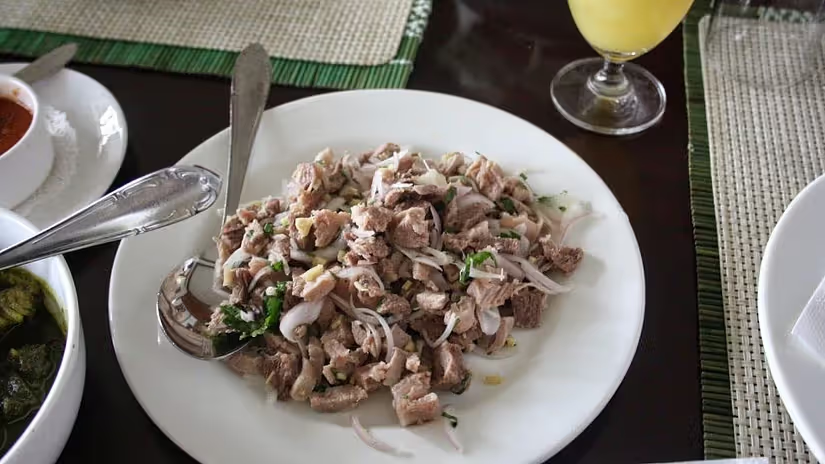
Food and Road
Both vegetarian and non-vegetarian food are widely available in most places. In remote villages, food choices are more limited than in major cities like Guwahati, Kaziranga, Shillong or Gangtok. If you are vegetarian or have allergies, tell us before the journey so we can coordinate with homestays. though the regional cuisine (rice, bamboo shoots, fermented foods, pork and fish) differs noticeably from mainland Indian food. Popular towns have no shortage of standard Indian restaurant menus alongside local specialities.
Yes, but advance planning is important. Dietary choices can be more limited in remote villages than in major Indian cities. Travellers with strict allergies or dietary restrictions should discuss their requirements with the tour operator before travelling so suitable arrangements can be made.
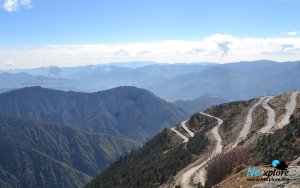
Roads vary a lot by state. Assam and Meghalaya have relatively good roads; Arunachal Pradesh, Manipur, Mizoram, and Nagaland have patchier infrastructure with narrow, winding mountain roads, occasional landslides, and long unpaved stretches in some places. A private vehicle with an experienced local driver, or a well-serviced vehicle if self-driving, is strongly recommended over relying on public transport for hill routes.
Planning and Itinerary
Guwahati (Assam) is the main gateway, with the region’s largest airport and rail connectivity to the rest of India. From Guwahati, the other states are reached by road, since most hill destinations don’t have direct flights or convenient rail access — expect long drives (often 6–10+ hours) between states. Meghalaya is located close to Guwahati, which takes 3 hours to reach by car.
It’s moderately priced compared to more touristy parts of India — homestays and budget hotels typically run ₹800–2,000/night, and local food is inexpensive. The main cost driver is private vehicle hire, since public transport is limited and unreliable in the hill states, especially for multi-state itineraries.
Q: What are the major festivals in Northeast India?
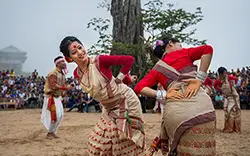
Bihu (Assam, mid-April), the Hornbill Festival (Kohima, Nagaland, first week of December), the Tawang/Torgya Festival (Arunachal Pradesh, winter), and the Ziro Music Festival (Arunachal Pradesh, September) are among the most popular. Timing a trip around one of these adds a strong cultural dimension but also means booking accommodation well in advance.
Northeast India is well known for its offbeat hidden valleys, Himalayan high-altitude destinations, tribal lifestyle and culture. A few offbeat attractions in Northeast India are Aizawl, Longwa village, Hongphoi village, Pfutsero, Wakha in Nagaland, Mechuka, Anini, Zemithang valley, etc in Arunachal Pradesh, Haflong(Assam), Loktak Lake in Manipur etc.
Layered clothing works best, since temperatures swing widely between valleys and high-altitude passes — light clothes for Assam/Meghalaya lowlands and heavy woollens, gloves, and a jacket if your route includes high-altitude Arunachal Pradesh (e.g., Tawang, Sela Pass). An umbrella or raincoat is essential if travelling through Meghalaya, one of the wettest places on Earth.
Major cities like Gangtok, Guwahati and Kaziranga have wifi facilities available in 3- 4 star category hotels. However, internet access is occasionally unavailable in the isolated regions of Nagaland, Manipur, Sikkim and Arunachal Pradesh. Even in isolated locations like Mechuka and Anini, be prepared for weak or intermittent mobile connectivity.
Northeast India is one of the most linguistically diverse regions in the world, home to hundreds of languages and dialects across its many tribes and sub-tribes. Hindi and English are widely understood in tourist areas, so language is rarely a practical barrier for visitors.
Safari operations are seasonal in most parks of Northeast India. Generally, Kaziranga and other national parks in Assam remain closed from May to mid-October due to monsoon and forest department decisions. Check the current opening dates and safari availability before planning your visit.
Pobitora Wildlife Sanctuary, which is located just 60 km away from Guwahati City, is the best place to witness one-horned rhinos, migratory birds and other animals. It has a high density of one-horned rhinos in a small area.
It depends on what you’re looking for. Tawang is Arunachal’s most-visited destination, known for its 400-year-old Tawang Monastery (the largest in India and second-largest in Asia), Sela Pass, war memorials, and high-altitude lakes — it has well-developed tourist infrastructure, more hotels, and is easier to reach in 2–3 days from Guwahati. Mechuka and Anini is far more remote and untouched, with fewer crowds, close-up tribal (Memba) village experiences, the Siyom River, splendid waterfalls and pristine grassland. Both Anini and Mechuka have basic facilities. If you want iconic monuments, culture, and easier logistics on a shorter trip, choose Tawang. If you want off-the-grid solitude and don’t mind a longer, rougher journey, full of thrill and adventure, choose Mechuka or Anini. Travellers with 15–20+ days can combine all in a single Arunachal circuit.
Our answers are based on destination knowledge, guest questions, route planning and first-hand experience operating tours across Northeast India.
Still have a question?
Our team responds to WhatsApp messages from anywhere in the world —
typically within a few hours during Indian Standard Time business hours.
Related Read
Last Updated on September 30, 2026 by Nexplore Travels