
Estimated reading time: 13 minutes
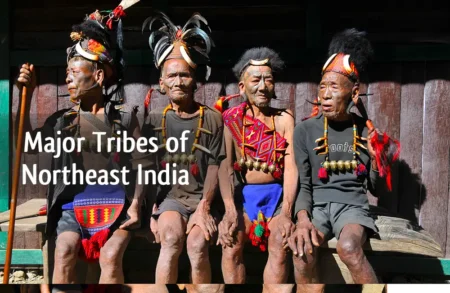
The Hornbill Festival is a vibrant celebration celebrated in Nagaland, India. It showcases the state’s rich cultural heritage and tribal traditions. This festival brings together all the major tribes of Nagaland and Northeast India, showcasing their unique customs, music, dance and art. Visitors can enjoy traditional performances, participate in indigenous games, and explore Naga cuisine and crafts. It is known as the “Festival of Festivals” and represents the cultural diversity of Nagaland’s tribes encouraging intercultural relations among them.
The festival is held for 10 days, from 1st December to 10th December every year, and has lots of exciting activities in store. The festival, held in Kisama Heritage Village near Kohima, has become a major attraction for tourists, offering a colourful glimpse into the dynamic tribal culture of Northeast India.
I had the opportunity to attend the first day of the Hornbill Festival during my trip to Kohima. I had already explored some of the best attractions in Kohima, which I shared in my previous blog.
With lots of excitement, I woke up early in the morning and got ready to attend the festival. After having breakfast at the hotel, we headed out to find a shared taxi that could take us to Kisama Village, the venue of the festival. The journey was long, but the anticipation of what we would experience at the festival kept us going.
How to reach the Hornbill Festival from Guwahati?
The Hornbill Festival is held at Kisama Heritage Village, located near Kohima, the capital of Nagaland. If you are travelling from other parts of India, the nearest airport and railway station are at Dimapur. Dimapur is well connected by flights and trains from several major Indian cities. Another convenient option is Lokpriya Gopinath Bordoloi International Airport (GAU) Guwahati or Guwahati Railway Station, especially for travellers coming from outside Northeast India.
From Guwahati, you can take a train to Dimapur and continue by road to Kohima. There are several trains connecting Guwahati and Dimapur, so you can choose one based on your travel schedule. From Dimapur Railway Station, shared taxis to Kohima are available throughout the day. From Kohima, you can hire a taxi to Kisama Heritage Village, where the Hornbill Festival takes place.
For travellers arriving by air, you can fly to Dimapur Airport and continue to Kohima by taxi. Alternatively, fly to Lokpriya Gopinath Bordoloi International Airport (GAU) at Guwahati and travel to Kohima by road or train.
Note: Shared taxi fares, travel times and availability can vary, particularly during the festival. Check the latest local transport information before travelling.
Experience the Hornbill Festival in Nagaland
Go beyond the festival stage and explore Naga villages, traditional food, local markets and tribal culture with a locally planned private journey. Explore Hornbill Festival Tour WhatsApp UsWhat are the best days to attend the Hornbill Festival?
First Day of the Hornbill Festival is the best day to attend the festival
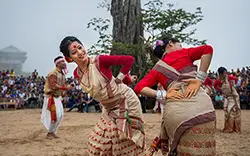
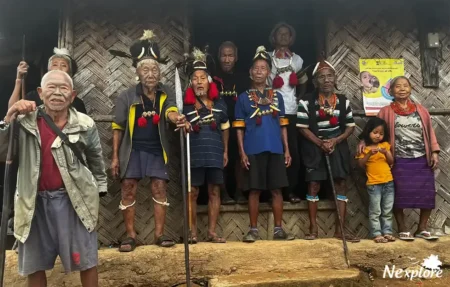
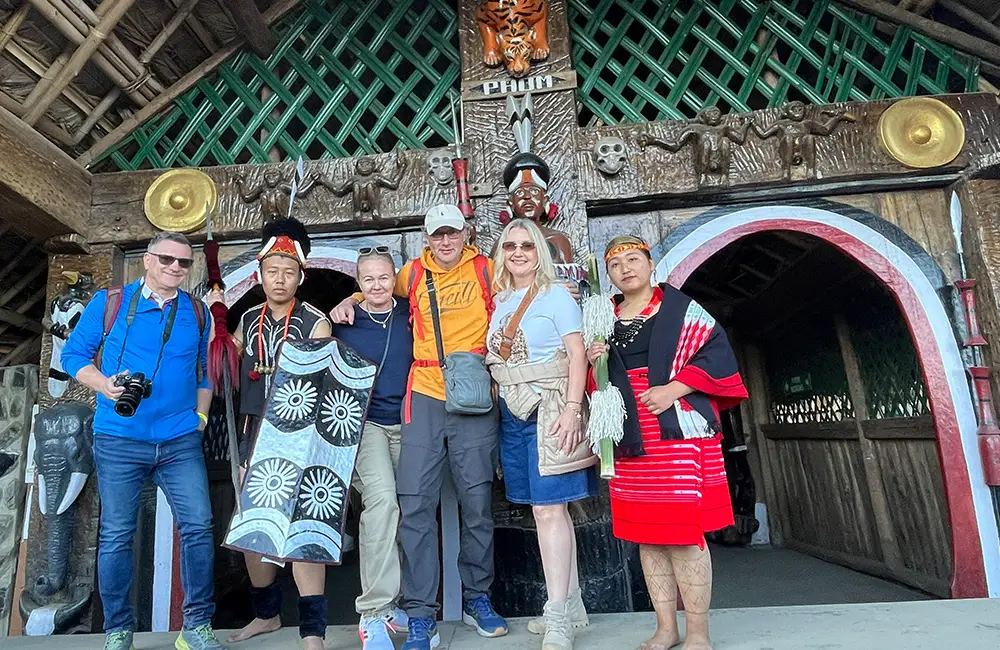
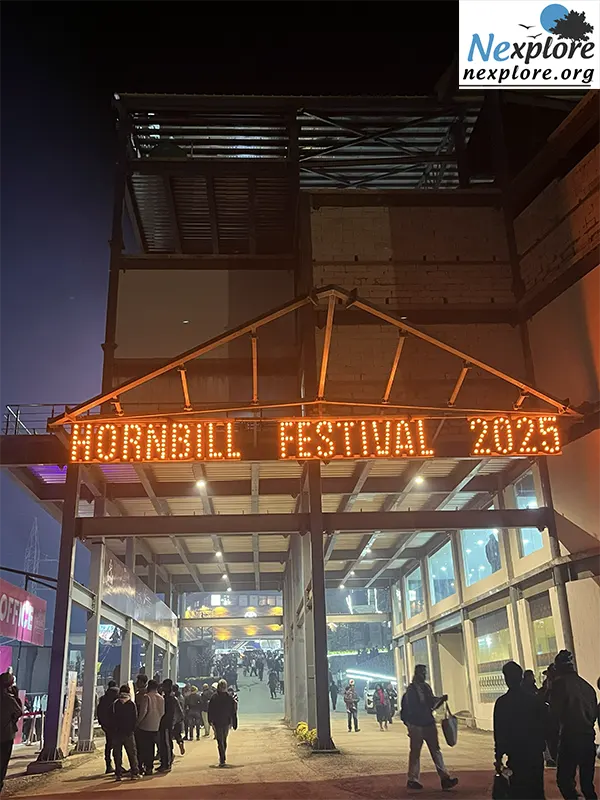
On reaching Kisama, we first saw the big ornamented gate of the Hornbill Festival. Passing the gate, we encountered young Naga boys and girls, dressed in their colourful traditional attire. They also adorned themselves with their weapons and shields, used during wars and hunting. These young boys and girls were representing the various tribes of Nagaland. They were welcoming the guests. The smiles and youthful vigour of this young lot mesmerised the guests and brought zeal of festivity to all.


Hornbill Festival: The Opening Ceremony
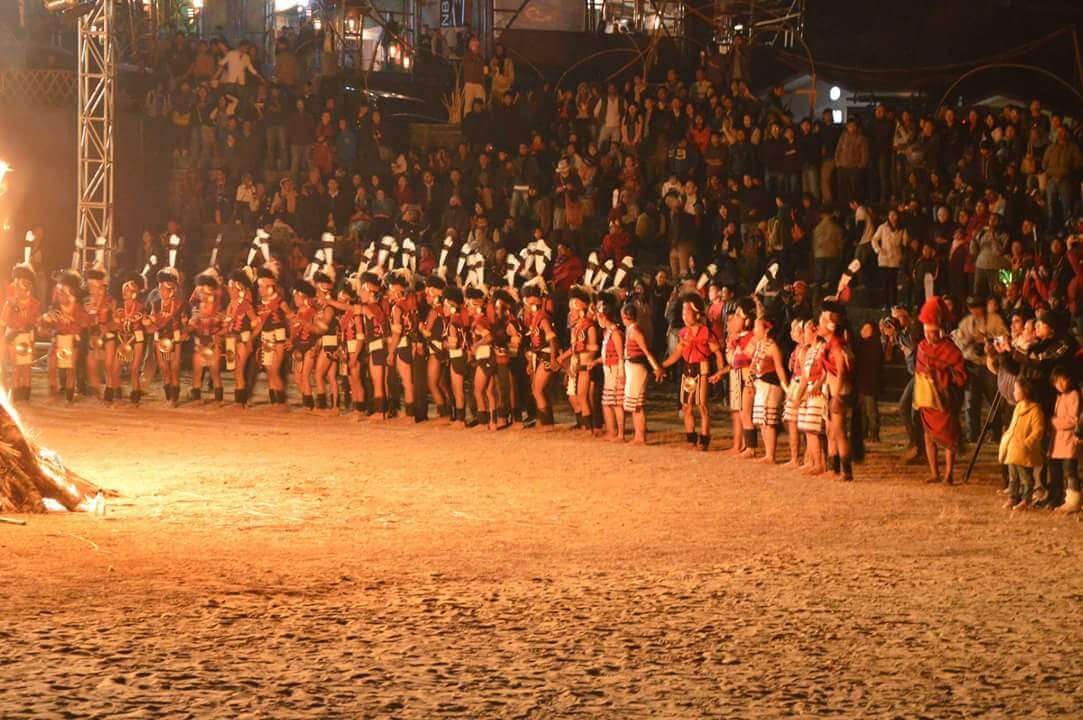
The festivities began with all the dances, folk songs and dance drama performed in groups. All the tribes of Nagaland made their presence felt with the performance of their form of dance and songs. The other neighbouring states of North East India also represented themselves through various cultural performances. We enjoyed to our heart’s content as we swayed and smiled, listening to the soulful, energetic rhythms.

What food should I try at the Hornbill Festival?
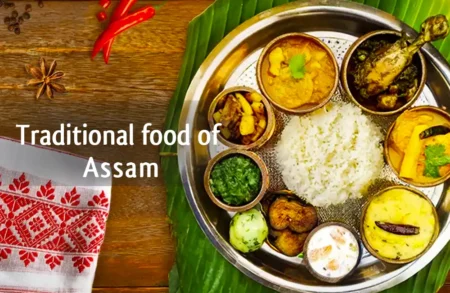
Rice beer is a must-try here. If you are non-vegetarian definitely try the smoked pork and prawn pickle
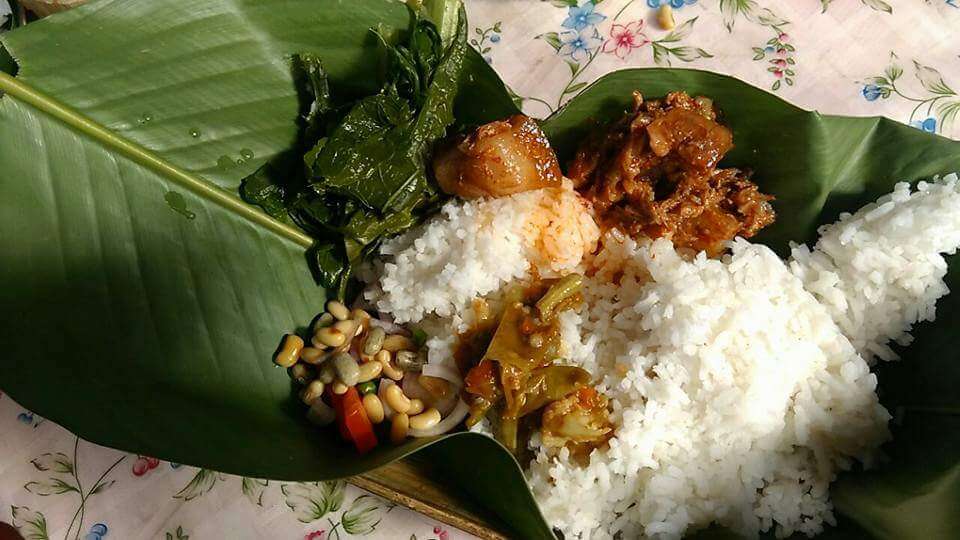
We saw various delicacies being prepared in the different morungs. The most famous ones are roasted pork, chicken, fish, buffalo etc cooked over a coal fire. There was rice beer, traditional stews made out of snails, dogs, fish etc. We were just spoilt for choice.
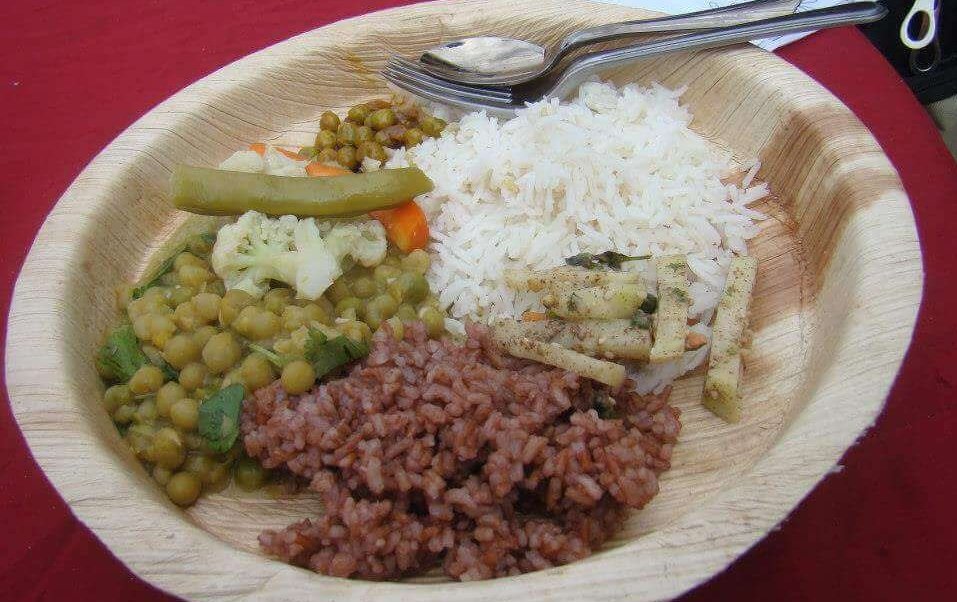
We readied our taste buds and headed towards the morung of different tribes. The ‘Kachari tribe’s simple snacks attracted us, and we had Rice beer with a special Prawn chutney. The combination tasted awesome. We saw others enjoying Pakodas, Fried Fish, etc., there.
There were stalls especially set up for vegetarians, too. Snacks, sweets, hot and cold beverages were also available in different stalls. During lunchtime, the air of Kisama Heritage Village was thick with the aroma of different delicacies prepared by the tribes.
What to Expect
Morungs and different tribes of Nagaland
Morungs are special huts where youth practice different skills like using a bow and arrow, wrestling and making different crafts, etc. In the Hornbill Festival, the Morungs took a very significant role, where the people of different tribes stay in their huts during the festival and perform their cultural and traditional practices for the audience in front of the morung.
Morgungs are a significant part of Naga culture
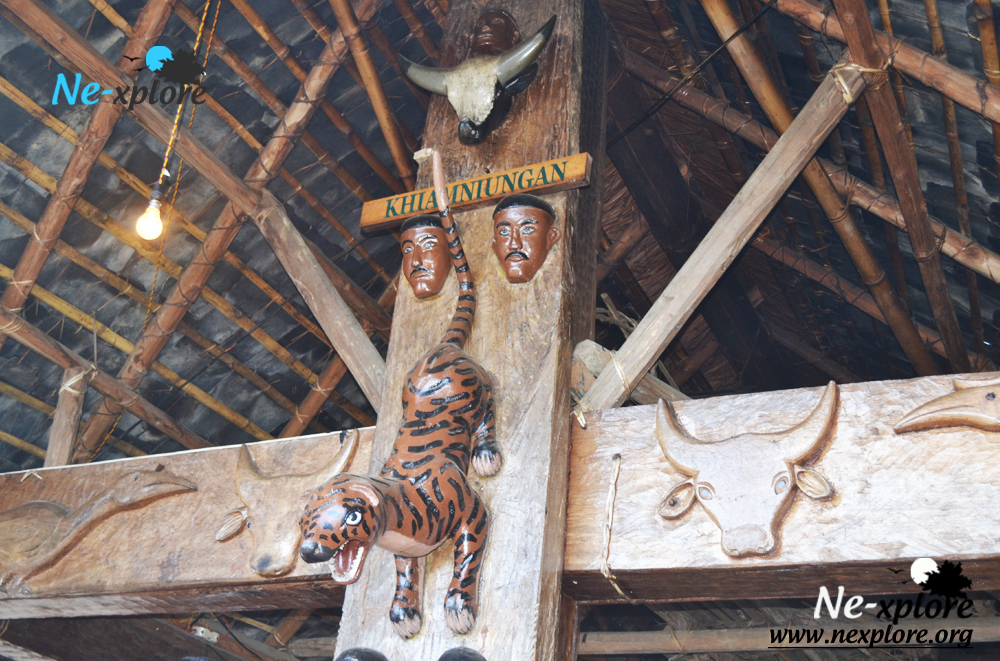
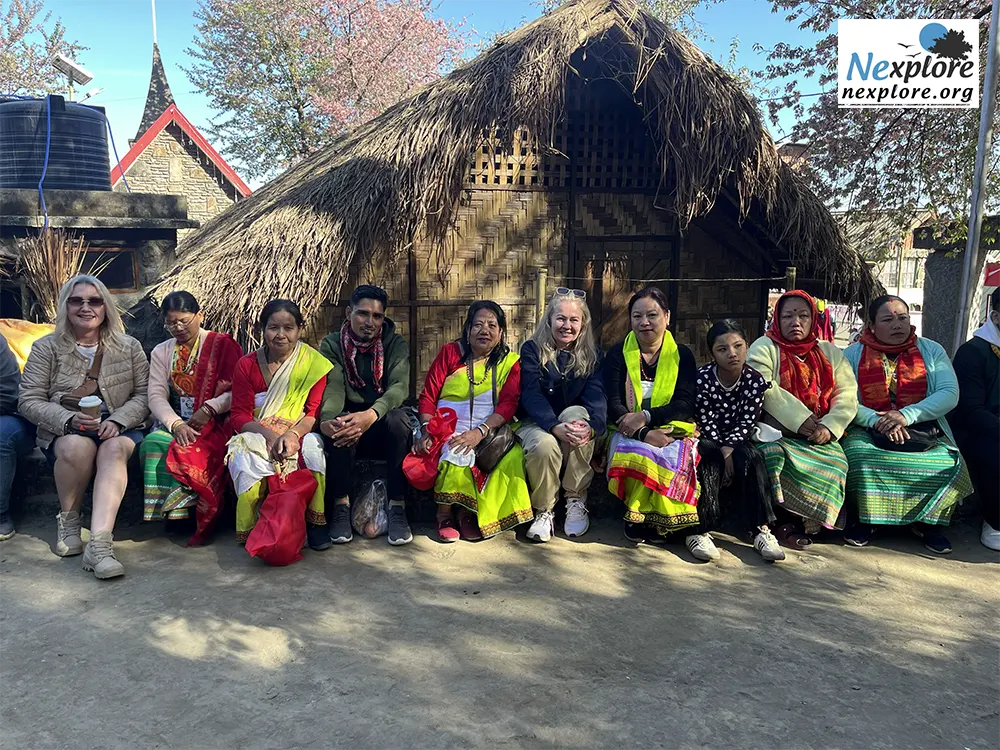
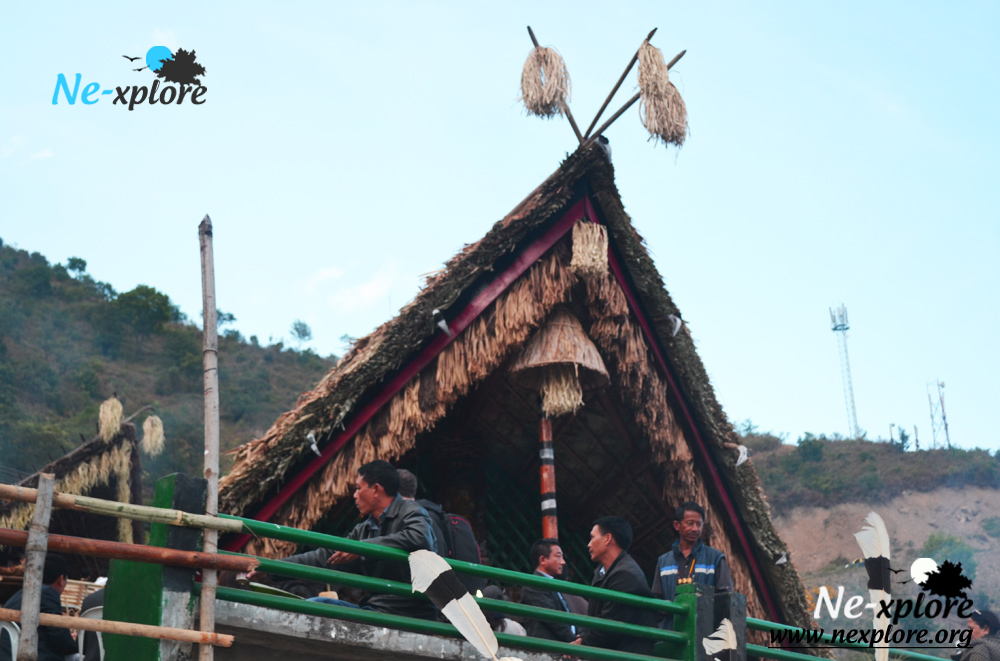
All the Morungs were decorated with the traditional items belonging to the individual tribes. Representatives of those different tribes were dressed in their traditional attire and were standing in front of their individual Morungs, welcoming guests with smiles. Some of them were seen performing their traditional songs and dances in front of their Morungs.
During the Hornbill Festival, every member of Nagaland aspires to portray the best of Naga food and culture. We felt privileged to be a part of this mesmerising festival.


What to Buy — Shopping Guide
Everyone, from kids to octogenarians, finds something interesting to buy at the festival.
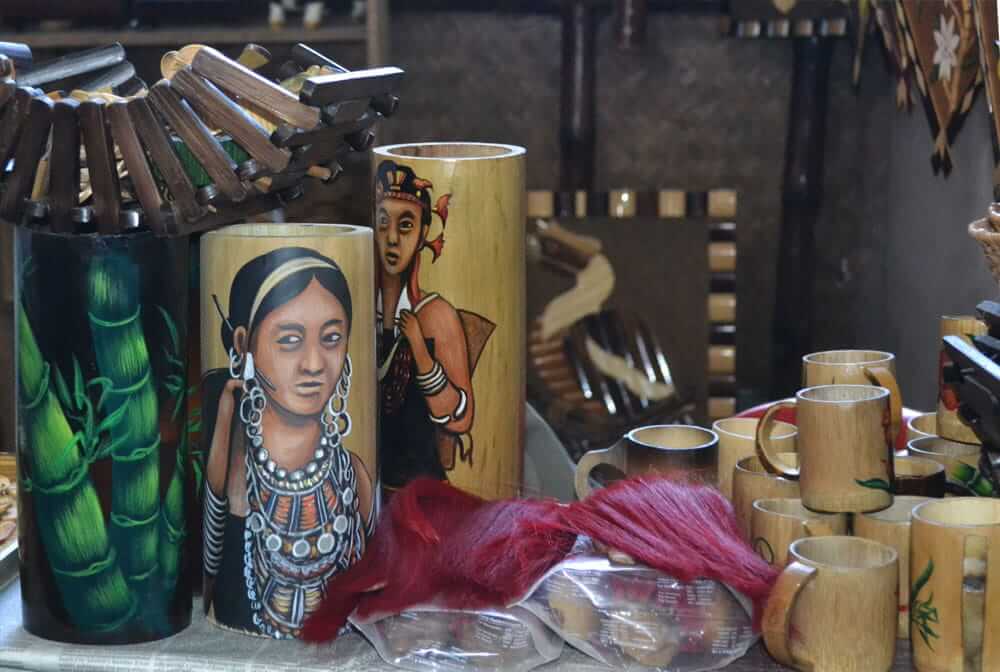
There are different stalls for shopping lovers too at the festival. One can shop for handicraft and handloom items, jewellery, decorative items and souvenirs. It also has a collection of traditional utensils, pottery and orchids. Buying a suitable gift for your loved ones is a must-do here. One can see the display of unique and unusual costumes, traditional events, art and craft. The cultural procession and distinctive events like bike rally, stone pulling competition show the versatility of this festival, making it more exciting.
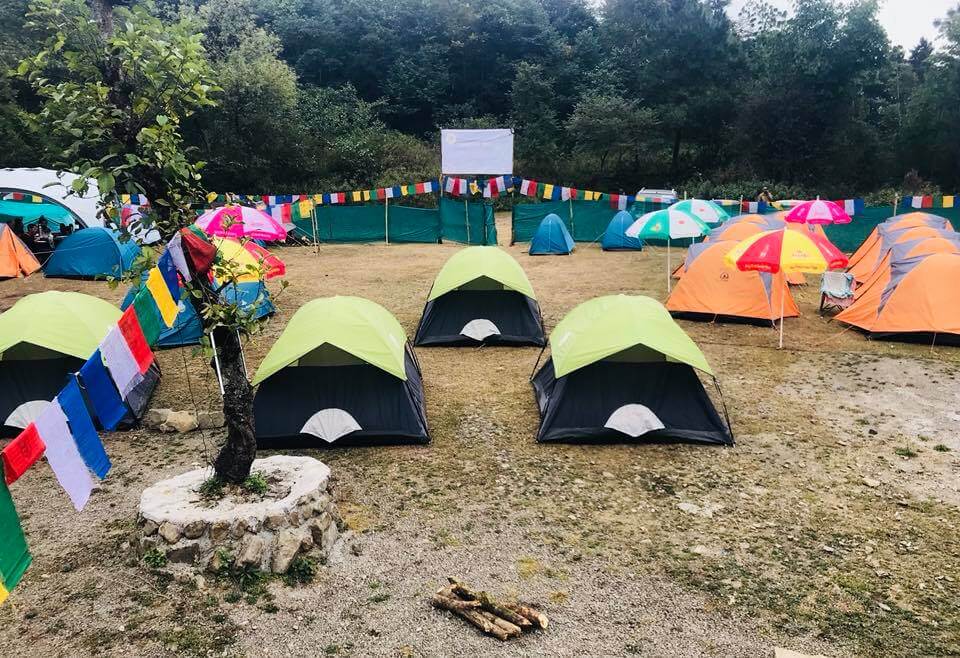
After spending a memorable day at the Hornbill Festival, we decided to stay in a camp for the night.
Where to Stay
You can stay in a homestay or a hotel in Kohima town. Please keep in mind that hotels are generally prebooked 3-4 months in advance during the Hornbill Festival. During the festival, camp stay is also available in nearby villages.
Staying in a camp
The camp stay was the best stay ever, and we liked the ambience and the simply delicious food provided in the camp. Sitting beside the fire and enjoying the night of the Hornbill Festival was a memorable experience for us.

What to Pack
Pack warm layers, a waterproof jacket and sweater and comfortable shoes—December mornings and evenings in Kisama can be quite cold.
Carry sun protection, a reusable water bottle, and a small daypack for exploring the festival grounds.
A power bank, basic medicines and personal essentials are useful during long festival days.
For photography, bring your camera, extra batteries, and memory cards—there will be plenty of colourful moments to capture.
Hornbill rock concert and other events
Every year, the schedule is different, so plan accordingly.
If you are a die-hard fan of rock songs, then please keep in mind that rock concerts took place in other major cities of Nagaland from 2016 onward. It took place in Dimapur, Mokokchung and other cities during the 10 days of the Hornbill Festival. During the Hornbill Festival, apart from dances, songs and indigenous games, world war 2 car rally, Naga chef competition, Naga chilli eating competition, Hornbill motor rally, Miss Nagaland beauty contest, Hornbill literature festival, Stone pulling competition, etc took place.
What else to see during the Hornbill Festival?
I have written enough about the cultural performances that took place in the Hornbill Festival. Apart from these, a flower show of stunning and vivid colourful flowers, a handloom and handicraft exhibition, a craft escape, a Hornbill photo fest and a horticulture show, etc, also took place in the Kisama Heritage Village. Kohima Museum is also situated in a corner of Kisama village. You will be delighted to take a glance at the museum when you get tired of watching the cultural programs.
My journey to the Hornbill Festival is indeed a lifetime experience. I am happy to be able to join the festival and have some first-hand experience. For those who are interested in culture, indigenous food, scenic nature and wildlife, we highly recommend checking out the Hornbill Festival Tour package.
Hornbill Festival for International Travelers
International visitors should plan their Nagaland entry requirements in advance. According to current rules, foreign nationals must obtain a Protected Area Permit (PAP) and need to register at a local police station. Indian visitors from outside Nagaland require an Inner Line Permit (ILP). The Nagaland government’s online ILP system also lists foreign tourists among its categories, so travellers should verify the latest requirements before departure.
For a comfortable festival experience, pre-book accommodation and transfers. Carry your passport, VISA, permits and travel documents.
FAQ on Hornbill Festival
Yes, especially if you’re interested in culture, photography, food, or indigenous traditions. The festival brings together different Naga tribes in one place, making it one of the easiest ways to experience the cultural diversity of Nagaland in a single trip.
While the festival runs for ten days, most travellers spend 2–3 days exploring the main cultural performances, tribal morungs, handicraft stalls, food courts and rock concerts. If you also plan to visit Kohima, Khonoma, Dzukou Valley or Longwa Village, consider one week. Find 12 days Nagaland and Hornbill Festival tour.
The opening days usually feature grand cultural performances and attract larger crowds. Mid-festival days often provide a more relaxed experience with better opportunities to interact with artisans, performers, and local communities.
One of the biggest attractions of the festival is that representatives from various Naga tribes participate and showcase their traditions, costumes, music, food, and heritage at the same venue in Kisama.
Absolutely. Traditional tribal attire, colorful performances, traditional architecture, local crafts, and cultural demonstrations provide excellent photography opportunities throughout the festival.
December mornings and evenings in and around Kohima can be quite chilly, while afternoons are usually pleasant. Carrying warm layers, a light jacket, and comfortable walking shoes is recommended.
One day is enough to get a glimpse of the cultural performances and festival atmosphere. However, travelers who want to explore the tribal pavilions, local food, crafts, and evening programs generally find two or more days more rewarding.
Yes. Hornbill Festival is one of the most popular cultural events in Northeast India and attracts visitors from across India and around the world. It is often considered the easiest introduction to Naga culture for international travelers.
Entry to the Hornbill Festival is free for all visitors during the day. However, an entry pass is required for the Hornbill Rock Concert, which takes place in the evening.
Ready to experience the Hornbill Festival?
Ten days of music, dance, food and tradition, all in one place. Rooms in Kohima fill up early and logistics get tricky in December, so let us handle the planning while you enjoy the festival. Explore Hornbill Festival Tour or Browse all Nagaland tour packages Have questions about dates, permits or where to stay? Email us at support@nexplore.org to start planning your trip. We reply within 24 hours and can customize the itinerary for Indian and international travelers.Related Read
Last Updated on October 4, 2026 by Nexplore Travels