

In the hubbub of present-day city life, we all secretly nourish the hope of spending some time amidst nature. Nature beckoned us when we got an invitation from a friend in Khonoma village near Kohima, Nagaland. We had heard a lot about Khonoma village, its greenery and beautiful surroundings from our friends. We did not want to lose the opportunity and decided to fulfil our long-nurtured dream of losing ourselves amidst nature’s serenity.
If you miss my last posts about Kohima city and the Hornbill Festival. Please check at – Top Places to Visit in Kohima and Detailed guide to Hornbill Festival
Reaching Khonoma village
Khonoma, also known as the green village of Nagaland, is situated 20 kilometres west of Kohima.
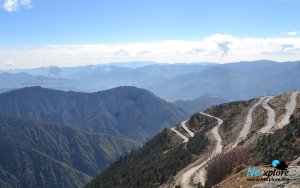
The road leading to Khonoma is both winding and uphill. Although our journey to Khonoma from Kohima through the unpaved roads was uncomfortable, the surroundings made it very pleasant. We came across terraced fields on different heights with various paddies and crops. The greenery all around was quite soothing to our eyes.
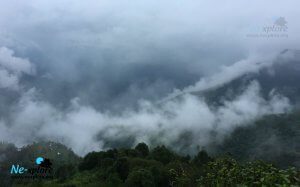
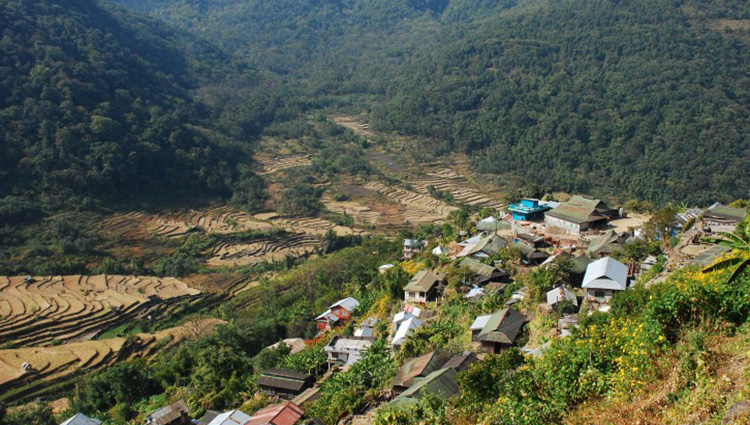
We were totally mesmerized when we reached Khonoma village. Towards one side of the village were green hills whose peaks were shrouded in clouds and on the other side, the terraced paddy fields could be seen. We spent the night in one of the homestays. We woke up the next morning to the sound of waterfalls and chirping birds. After having our breakfast, we decided to explore the village.
What to see in Khonoma Village
We started walking through the small alleys and winding staircases leading to the houses of most villagers. We saw that most of the houses were made of mud floors and bamboo walls. All the houses were adorned with beautiful and colourful flowers. Almost all the houses also had kitchen gardens to satisfy their daily need of fruits and vegetables. The whole village seemed like an organic hub with its own gardens and surrounding paddy fields.
This village is also famous for using a unique form of agricultural method known as shifting cultivation or jhum cultivation practice in the hilly regions.


Khonoma Forts and Angami Naga villages
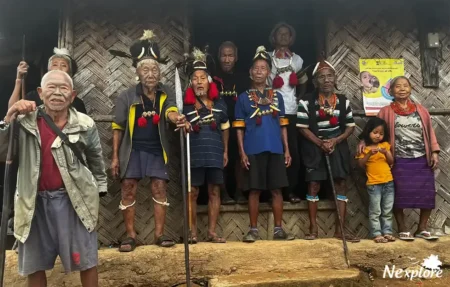
The Khonoma village is unique in one respect. The villagers, members of the Angami tribe, bury their dead family members near their homes.
So while exploring the village, we saw people having the graves of their relatives near their houses. The villagers of Khonoma are also known for their craftsmanship, and we found that all the stairways of the village are carved out by the villagers themselves.
There were various places to see in the village, like forts, old monuments and ‘Murungs’. This village also happens to be the last place where the Naga warrior battled against the British. Tombstones are erected to pay tribute to the Naga martyrs who gave their lives in this battle. We visited 3 forts located in Khonoma village. By visiting these forts, we could recall the 1879 battle of Khonoma and feel proud of the brave Naga warriors.
Forts of Khonoma – proud survivor of the 1879 battle of Khonoma


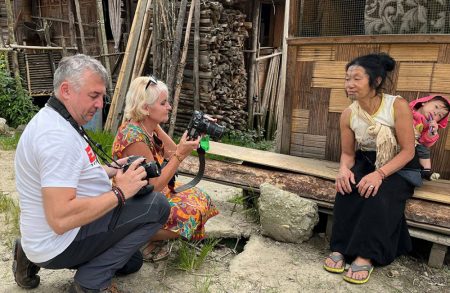
On our way, we explore several Murngs too. The ‘Murung’s exhibited Angami Naga handicrafts, old utensils, traditional arms, musical instruments, etc. There were certain community centres too, where some village members displayed their weaving skills and other craftsmanship. We were mesmerised to see how skilful they were.
The one thing which would always be fresh in our minds would be the cleanliness of the village. Nature has gifted this village with such lush green abundance that no material riches can ever match it.
Khonoma village Morung
Morung Ghor or the dormitory was the school for learning various skills like age-old traditions, woodcrafts, martial art and farming in ancient times. Now the ‘Murung’s exhibited Angami Naga handicrafts, old utensils, traditional arms, musical instruments, etc.
Morungs are like certain community centres where village members display their weaving skills and craftsmanship. Beautiful pictures of animals and birds are also drawn on the walls of the Morung.
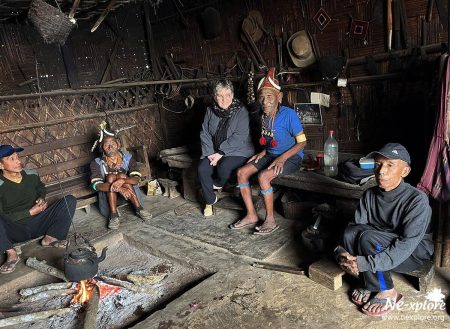
 Inside a Morung in Khonoma, where traditional weapons are preserved
You may be interested in why you should visit the Hornbill Festival once in a lifetime
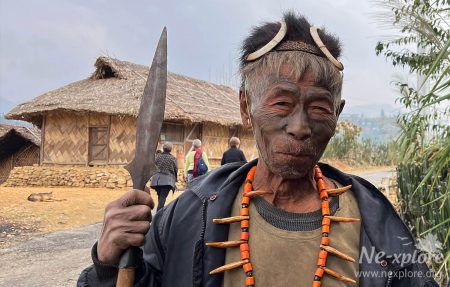
Angami tribes home in Khonoma Village

Why Khonoma is known as a green village
Due to the cutting of trees in the forests, the environment and ecological balance are disturbed to a high extent. To maintain the ecological heritage and the environmental degradation, the villagers of Khonoma have stopped cutting trees and hunting wild animals and birds in the village forest area since 1998.
A few old hunters and knowledgeable villagers took the initiative to save the forest and stop cutting trees and killing wild animals. Now everyone follows it, and the village is regarded as a green village. They also practice jhum cultivation and shifting cultivation to stop the degradation of hills.
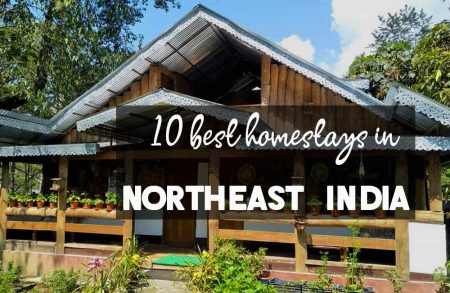
Khonoma village homestay
Lots of local families in Khonma offer homestays to guests.
By staying in a homestay, you can feel the warmth of home and the authenticity of staying with a local family. We enjoyed traditional Naga food and had a delightful time staying in the Khonoma village homestay.
Our homestay provided us with all the basic amenities for a comfortable stay. To experience living amidst nature, in a village flourishing with cleanliness and greenery, you can book your stay in a Khonoma village homestay.
My journey to the Hornbill Festival and Khonoma green village is indeed a lifetime experience. I am happy to be able to join the festival and have had some fantastic experiences.
What to Eat
Nagaland has a wide variety of traditional food, which is completely different from the rest of India. If you like to experiment with food, then you can try lots of different Naga Cuisines. I would like to suggest you try pork curry cooked in traditional style using fermented bamboo shoots and fish chutney. Of course, it is very spicy, but you won’t forget the taste once you taste it. Lastly, if you prefer vegetarian, then you can try the boiled vegetable curry cooked using “Axone”, a traditional spice made of fermented soybean available only in Nagaland.

How to travel around
Walking on foot is the best way to explore the village. The village is located on top of a hill. The terrain ranges from gentle slopes to steep and rugged hillsides. Most of the alleys around the village are very small and a bit confusing for a first timer. So please hire a local guide for a day tour in Khonoma. A local guide will cost Rs 500 for the entire day, and there is a small entry fee of Rs 50, which is generally collected in the village gate.
Best time to visit Khonoma
You can visit Khonoma at any time of the year. But the best time is definitely during the Hornbill Festival. You can club together with your Hornbill Festival tour and spend a day in Khonoma village, enjoying closeness with nature, Naga Hospitality at its best.
If you love trekking and nature madly then you can also go for trekking in Dzuleke and Dzukou valley, located just a few kilometres away.
Dzuleke is a small hamlet situated around 20 km from the village of Khonoma. Dzukou Valley is a stunning valley of Nagaland adorned by pristine natural beauty. Dzukou Valley can be accessed only by trekking from Jakhama Village. Read more at Experience the Stunning Dzukou Valley.
Eco‑Tourism & Responsible Travel in Khonoma
1. Support Local Homestays and Guides
Choose to stay in locally-run homestays which not only offers a more authentic experience but also helps support local livelihoods. Hiring a local guide can also deepen your understanding of the village’s unique history, conservation efforts, and way of life.
2. Minimize Plastic and Waste
Avoid bringing single-use plastics. Carry your own water bottle and cloth bag. Dispose of waste responsibly or better yet—take it back with you if there are no proper disposal options available.
3. Khonoma is best explored on foot. Walking reduces your carbon footprint and allows you to appreciate the stunning terraced fields, forest trails, and natural surroundings in a more immersive way.
Where to stay in Khonoma ?
Khonoma village has a few standard hotels and tons of homestays, which offer authentic hospitality and mouthwatering food.

Khonoma village homestay
Several local families in Khonoma offer a homestay for guests. You can feel the affability of home and the authenticity of staying with a local family. We enjoyed traditional Naga food and had a delightful time staying in the Khonoma village homestay. Homestays provided all the basic amenities for a comfortable stay. If you want to book a homestay at Khonoma green village please write to us.

Cost of Homestay:
Homestays are very basic, offering basic amenities and amazing food. A homestay will cost Rs 2000 – Rs 3000 per night.
Khonoma tour packages
You can check our Nagaland tour packages or Hornbill Festival tour package to book your guided tour in Nagaland along with Kohima. You can also find guided and personalised Northeast India tribal tour packages curated by Team Nexplore.
Did you like this post or have any feedback? Please let me know in the comments section below! Or, if you have any further questions, feel free to ask.
What other places can I cover during the Hornbill Festival?
Apart from Khonoma village, you can visit the most beautiful Dzuleke village, which boasts a rich tapestry of unique flora and fauna, Dzukou valley, a surreal valley loved by trekkers, and Touphema Tourist Village, one of the ancient heritage villages of Nagaland.
Like it! Pin it!

If you are looking for more information on Kohima and the Hornbill Festival, please check out the page dedicated to Kohima on our website, or email us at support@nexplore.org to start planning your trip!